

Report → understand → dual-KB retrieval → cited answer → capture
How it is built
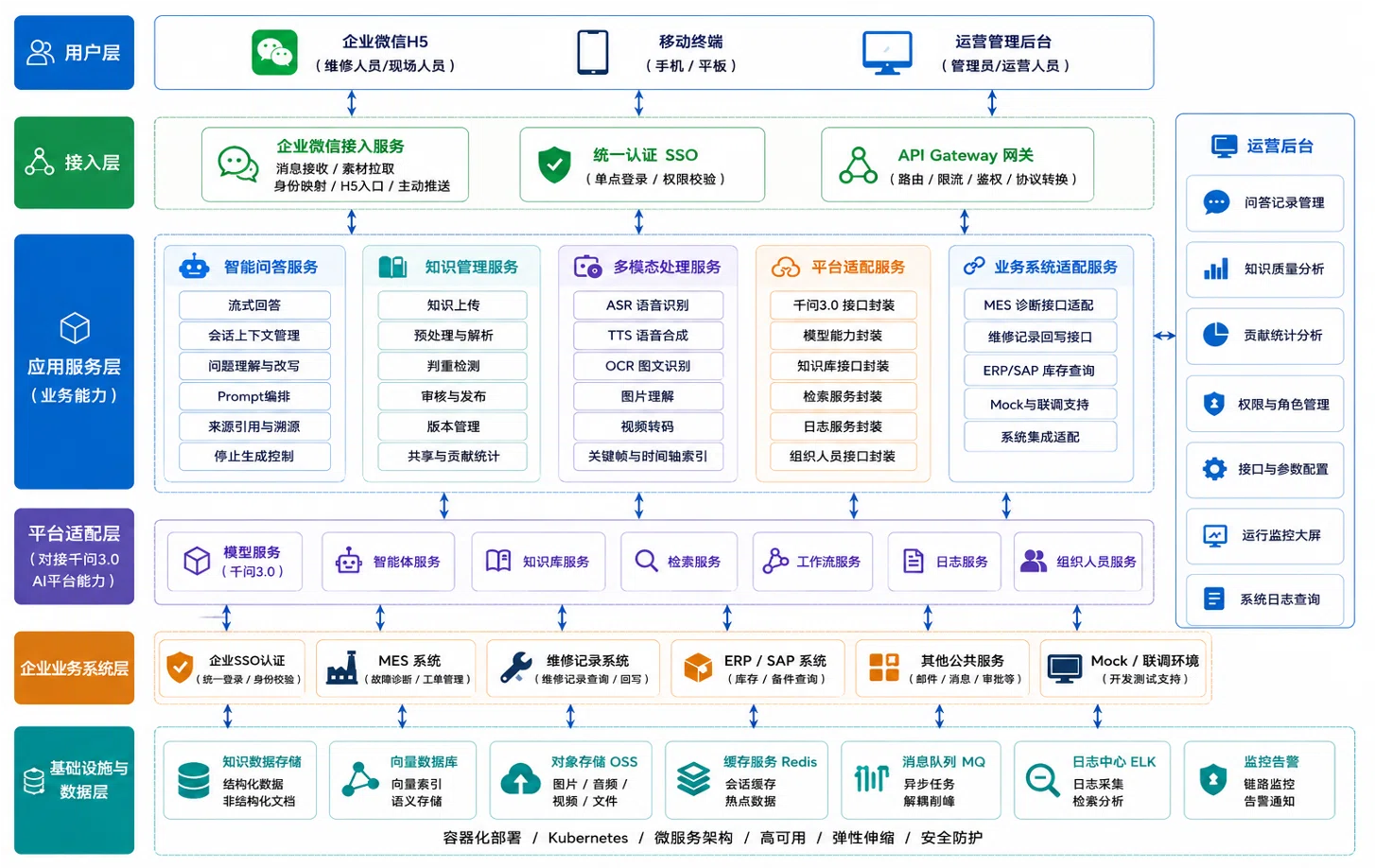
Architecture · five layers
WeCom and mobile on top, application and platform layers in the middle, MES and ERP-SAP underneath.
- Application layer splits Q&A, knowledge, multimodal and adapters
- Platform layer uses Qwen 3.0 plus in-house retrieval
- Containerised on Kubernetes; scale out without code changes
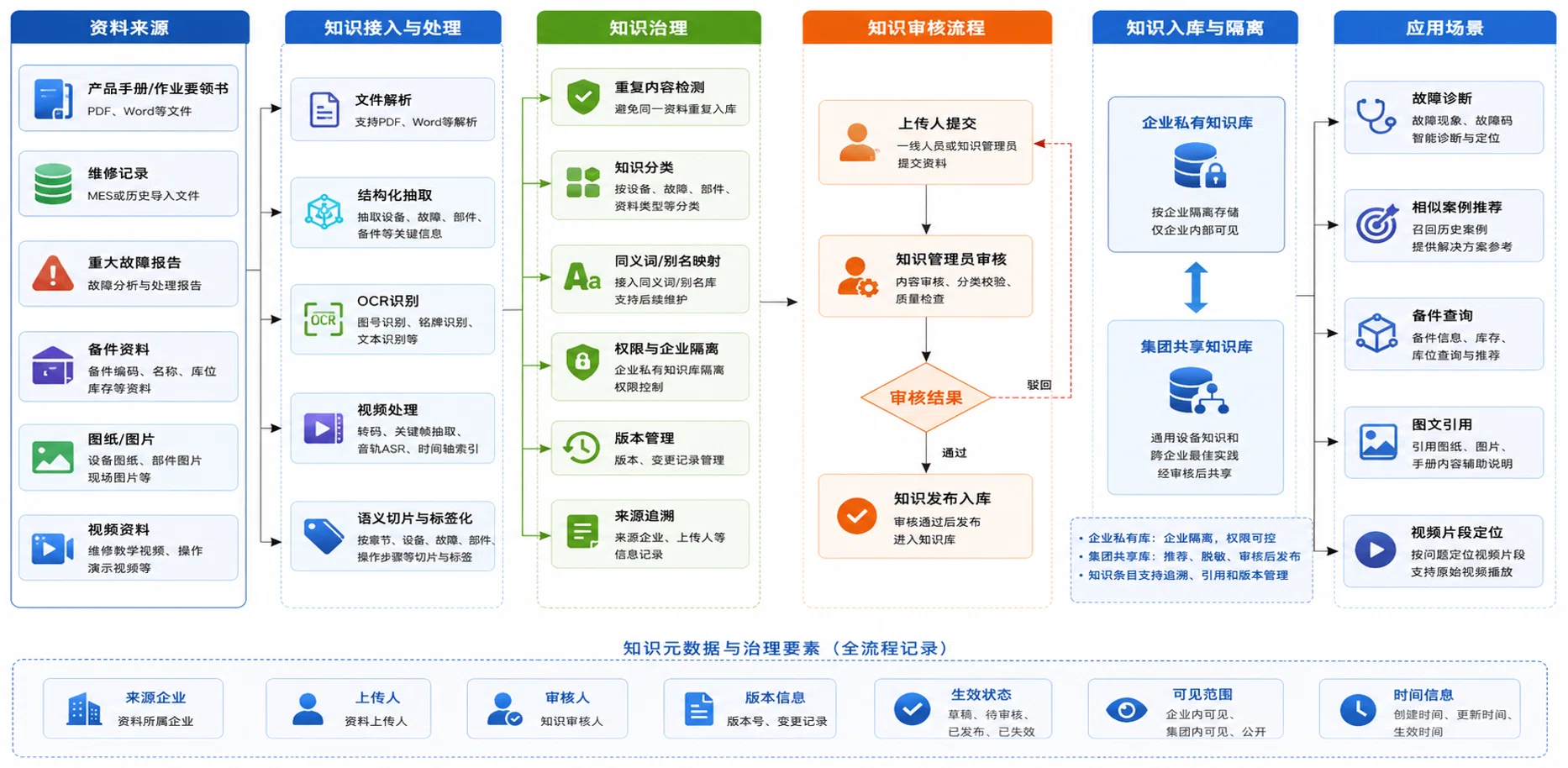
Knowledge build · files to usable knowledge
Manuals, work orders, failure reports, drawings and videos follow one pipeline: ingest, govern, review, isolate.
- Dedup, synonyms and versioning happen before ingest
- Review can reject; source and uploader stay traceable
- Private and shared knowledge bases are isolated
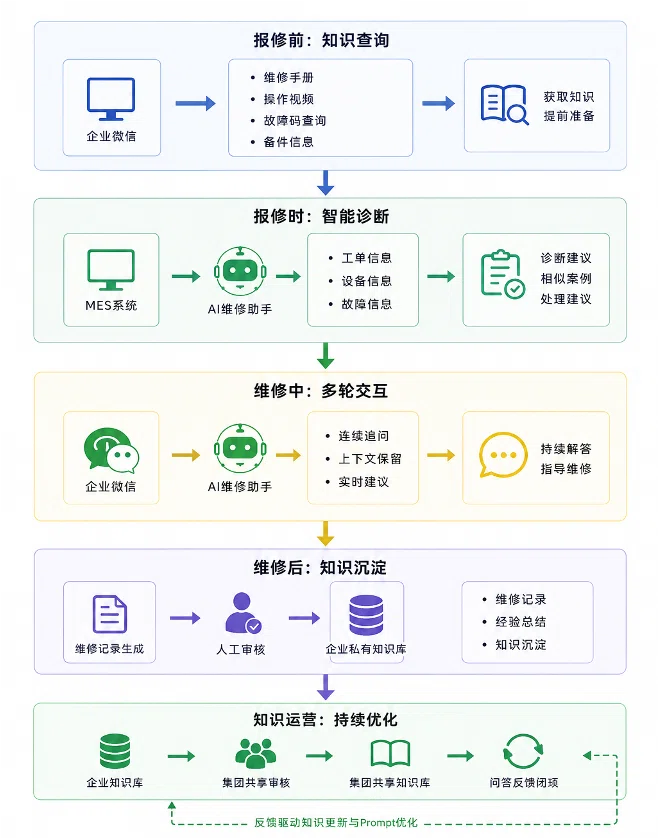
Business loop · five stages of one repair
Every stage involves the system; the fix is the start of knowledge capture, not the end.
- Look up manuals, videos and parts before the visit
- Multi-turn follow-ups keep context during repair
- Human review turns the fix into reusable knowledge
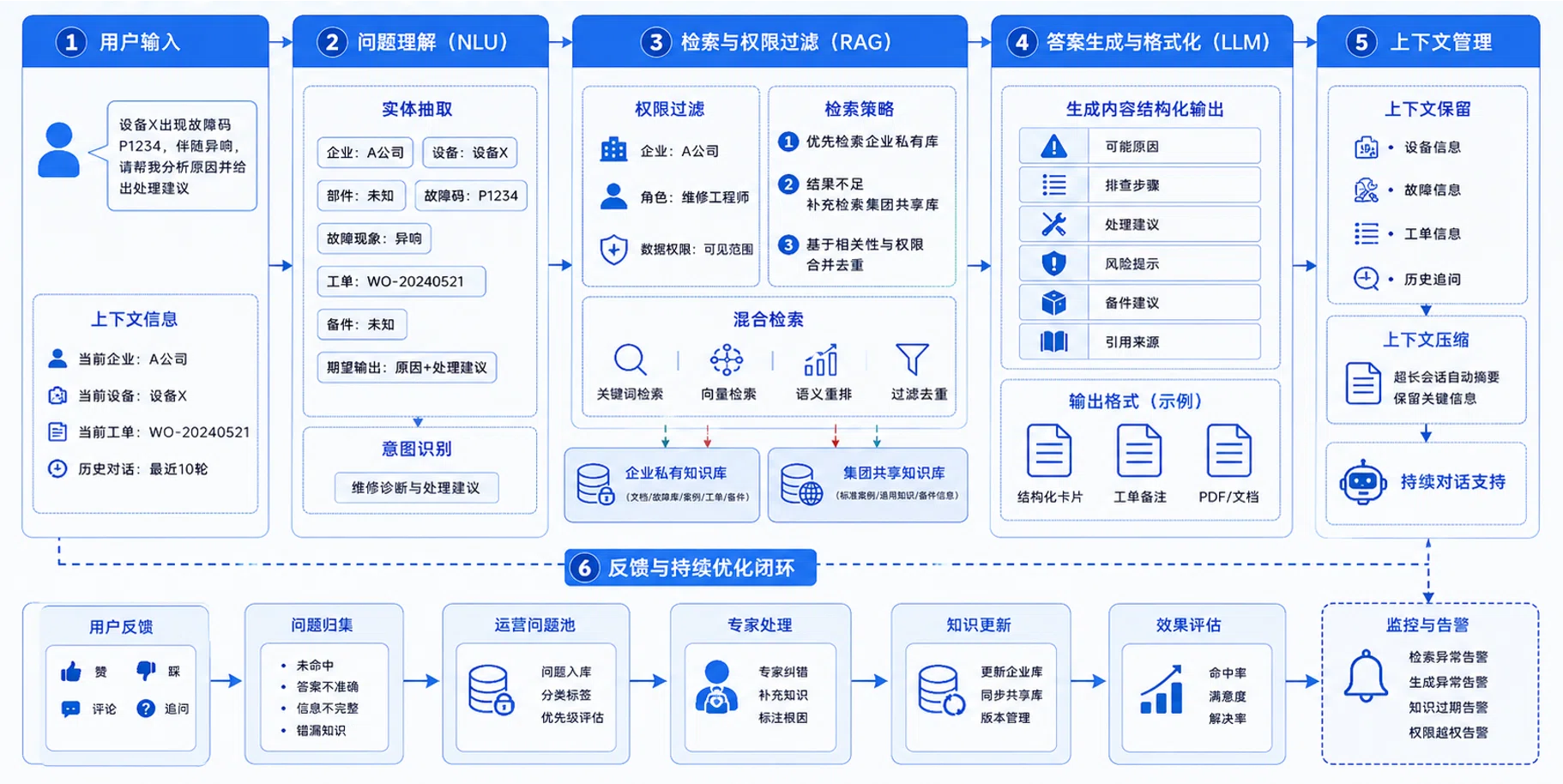
Answer pipeline · input to context
One sentence to a cited answer: extraction, permission filtering, hybrid retrieval, structured output, context.
- Permissions applied during retrieval, not after
- Output: causes, steps, risks, citations
- Thumbs and follow-ups feed an issue pool
Why it holds up in production
Always cited
Answers quote the KB; if retrieval fails, it says so
Permissions travel with the user
Entity and role filtering during retrieval
Multimodal ingest
PDF, drawings, OCR; video split into keyframes and audio
Deployable on-premise
Model service, vector DB and object storage stay yours
Observable
Four alert classes plus hit-rate and satisfaction
Feedback-driven
Expert corrections update the KB with root cause
Tell us where the process hurts — we turn it into a workable system.
We first diagnose where the process breaks and where the time is lost, then deliver a workable system plan, a timeline and an investment range — with a written proposal within 48 hours.